AI in Banking: How Autonomous Agents Are Changing Finance
The banking industry has always been quick to adopt new technology, but 2026 marks a turning point. Artificial intelligence is no longer just a backend tool for fraud detection or a customer service chatbot that answers FAQs. A new generation of autonomous AI agents is entering finance — software that can analyze, decide, and act on behalf of both banks and their customers, often in real time.
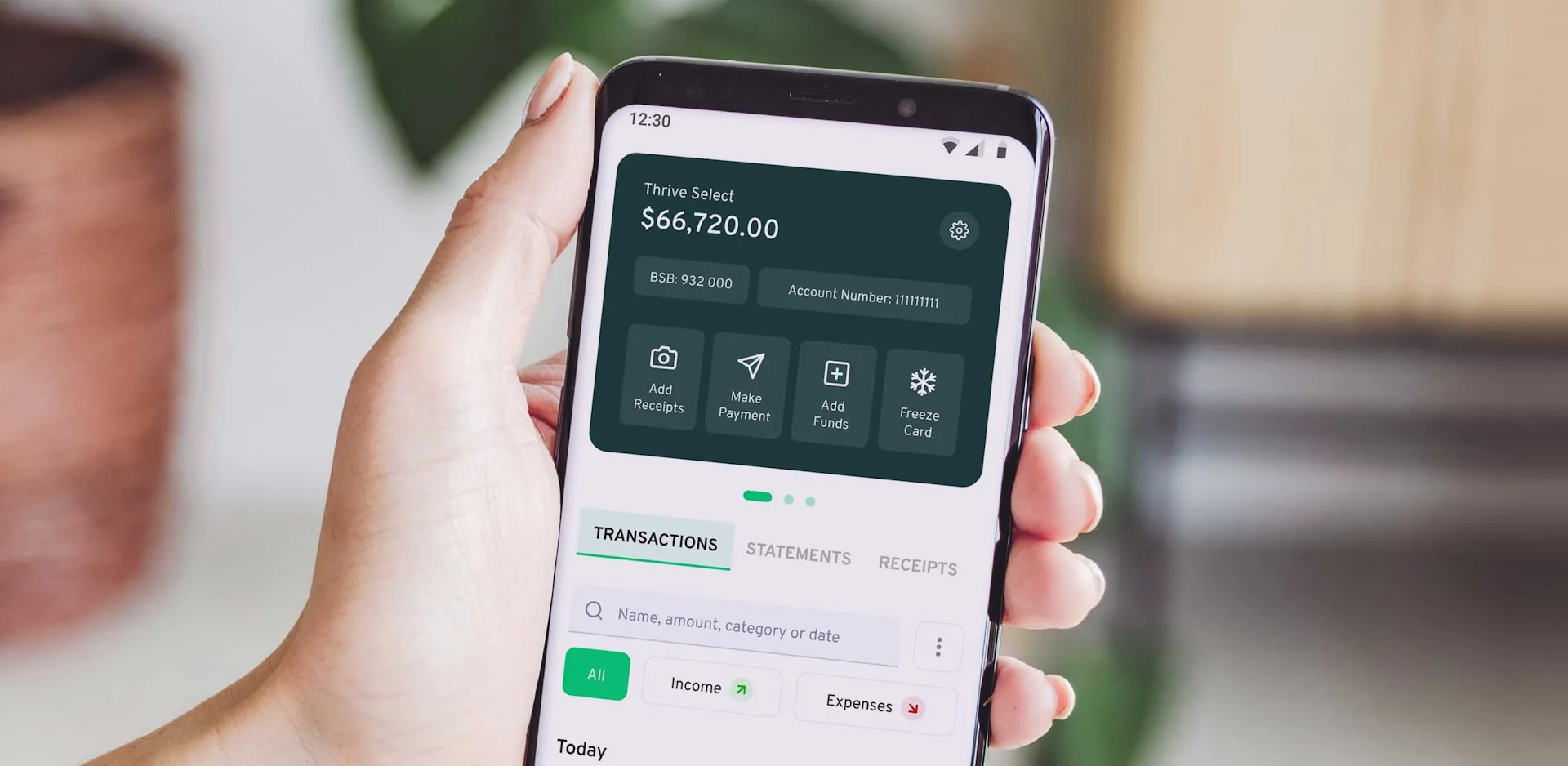
These agents are fundamentally reshaping everything from lending decisions to regulatory compliance, and they’re doing it faster than most people realize. If you’ve ever applied for a mortgage, disputed a transaction, or tried to optimize your savings, you’ve likely already interacted with an AI agent without knowing it. In this article, we’ll unpack what autonomous agents really do inside the financial system, who’s using them, and what it means for you.
What Are Autonomous AI Agents in Banking?
Unlike traditional banking software that follows rigid “if‑then” rules, an autonomous AI agent can interpret context, learn from patterns, and make decisions within defined boundaries. Think of it as a digital employee that handles a specific financial task end‑to‑end, without needing a human to push a button at every step.
Key features of today’s banking AI agents include:
- Real‑time data processing: They analyze transactions, market movements, and customer behavior as they happen.
- Decision‑making abilities: They can approve or flag a loan application, rebalance a portfolio, or block a suspicious payment.
- Natural language understanding: They can read and interpret emails, contracts, and regulatory documents.
- Continuous learning: The longer they operate, the better they get at spotting patterns and predicting outcomes.
Some of the world’s largest financial institutions — including JPMorgan Chase, Bank of America, and Morgan Stanley — already embed these agents deep within their operations, and smaller fintech startups are following suit with off‑the‑shelf solutions.
5 Areas Where Autonomous Agents Are Transforming Banking
Here’s a breakdown of the most impactful changes happening in 2026.
1. Hyper‑Personalized Customer Experiences
The days of a generic banking app with the same dashboard for everyone are behind us. Autonomous agents now act as personal financial concierges.
- Proactive savings: An agent can analyze your income and spending habits, then automatically move small, safe amounts into a high‑yield savings account without you ever having to set up a transfer schedule.
- Intelligent debt management: If you carry a credit card balance, an agent can calculate whether a consolidation loan would save you money, and even pre‑fill an application for you to review.
- Tailored investment nudges: Based on your age, goals, and risk tolerance, an agent might suggest adjusting your 401(k) allocation or exploring a new ETF — complete with a plain‑English explanation of why.
For example, Bank of America’s upgraded virtual assistant, Erica, now operates as a genuinely proactive agent for over 40 million customers, handling tasks that range from refunding overdraft fees to suggesting utility bill optimizations.
2. Smarter, Faster Lending Decisions
Loan approvals have historically been slow and paper‑heavy. Autonomous agents are collapsing the timeline from weeks to minutes.
An AI lending agent can:
- Pull your credit history, verify income through open‑banking APIs, and assess your debt‑to‑income ratio in seconds.
- Cross‑check your spending patterns for red flags that a human underwriter might miss.
- Approve straightforward applications immediately, or flag complex cases for human review with a detailed summary attached.
This speed doesn’t come at the expense of fairness. Financial regulators in the U.S., including the CFPB, now require “explainable AI” in lending decisions. Modern agents are designed to produce a clear, auditable record of why any decision was made, helping to avoid bias and satisfy compliance requirements.
3. Real‑Time Fraud Detection and Defense
Fraudsters are also using AI, but banks are fighting back with agents that operate like immune systems.
Instead of waiting for a transaction to clear and then investigating, autonomous agents:
- Monitor every single transaction in real time, scoring it for risk.
- Identify subtle behavioral anomalies — like a login from a new device at 3 a.m. followed by a rapid series of small‑value purchases — patterns that rule‑based systems often miss.
- Immediately freeze suspicious activity and send an alert to the legitimate customer via multiple channels (push notification, SMS, email).
- Some can even initiate a “self‑healing” process: rolling back an unauthorized transaction and beginning a dispute while simultaneously flagging the counterpart account.
JPMorgan Chase has publicly stated that its AI systems now prevent hundreds of millions of dollars in attempted fraud each year, and the models improve continuously as they ingest new threat data.
4. Algorithmic Trading Evolved
Algorithmic trading isn’t new, but autonomous agents bring a profound shift: they can now interpret unstructured information, not just numerical data.
In 2026, trading agents at firms like Goldman Sachs and Morgan Stanley can:
- Read breaking news headlines, central bank speeches, and even social media chatter, then assess the likely impact on asset prices.
- Adjust portfolios in response to geopolitical events before a human analyst has finished reading the first paragraph.
- Execute complex multi‑leg trades across different asset classes simultaneously to optimize for tax efficiency or risk exposure.
For the average investor, this technology is trickling down through automated advisory platforms (robo‑advisors 2.0) that can now manage more sophisticated strategies than a simple 60/40 stock‑bond split, all at a fraction of the cost of a traditional financial advisor.
5. Automating the Compliance Backbone
Behind the scenes, a massive amount of banking work involves compliance: ensuring every transaction, every product, and every communication meets regulatory standards. This area is notoriously expensive and labor‑intensive, making it a prime target for automation.
Autonomous compliance agents can:
- Scan millions of internal documents, emails, and trade records for potential regulatory violations.
- Automatically generate reports required by the SEC, OCC, or Federal Reserve.
- Track changes in laws and regulations across different jurisdictions and flag policies that need updating.
- Assist in anti‑money laundering (AML) investigations by connecting the dots between seemingly unrelated transactions, a task that previously required teams of analysts working for days.
This not only reduces costs for banks — savings that can theoretically be passed to consumers — but also dramatically reduces the risk of fines and reputational damage.
Challenges and Risks: What to Watch Out For
For all the benefits, autonomous agents in banking introduce serious concerns.
- Accountability: If an agent makes a wrong decision — like denying a loan based on flawed logic — who is responsible? The bank, the software vendor, or the AI itself? Regulators are still clarifying the answer.
- Systemic risk: When many banks use similar AI models, a correlated error could cascade through the financial system, amplifying market shocks instead of absorbing them.
- Bias and fairness: AI agents inherit biases from their training data. Banks must continuously audit their models to ensure they are not discriminating on the basis of race, gender, or zip code, even indirectly.
- Security: As agents gain more autonomy, they become attractive targets for cybercriminals. A malicious actor who compromises a payments agent could cause far more damage than a simple data breach.
Regulatory frameworks like the EU’s AI Act and evolving U.S. guidelines are pushing for mandatory testing, transparency, and human override mechanisms, but enforcement is still catching up.
What This Means for You
You don’t need to be a Wall Street executive to feel the impact of banking AI agents.
- As a consumer, you’ll increasingly interact with agents when applying for mortgages, managing your savings, or even just checking your balance. The good news is that these services are becoming faster and more personalized. The catch is that you need to know when you’re speaking to a bot and when you’re speaking to a human — and banks are required to make that distinction clear.
- As a small business owner, you can now access AI‑powered cash‑flow management tools, automated invoice processing, and real‑time credit decisions that were once reserved for large corporations. Fintech platforms like Brex, Stripe, and Square are embedding these capabilities into their offerings.
- As an investor, you may want to watch the growing market for “AI‑first” fintech companies and established banks that are successfully integrating autonomous agents. The financial sector is one of the few where AI adoption is directly and rapidly translating into measurable cost savings and revenue growth.
The integration of autonomous agents into banking is not a future event — it’s already underway. While the technology comes with legitimate risks, its ability to make financial services faster, cheaper, and more personalized is undeniable. The challenge for regulators, banks, and consumers alike is to ensure that as agents become more powerful, they also remain transparent, fair, and accountable.
- Interested in how AI is reshaping other industries? Read our guide on AI Agents for Small Business: Your 2026 Guide to Automation.
- Want more insights on finance and technology? Explore our Business & Finance section for expert takes on the trends that matter.