Logging Off Is the New Luxury: Inside America’s Digital Fatigue and the Analog Renaissance
Imagine willingly paying $300 to spend a weekend in a cabin with no WiFi — and calling it self-care. Or proudly pulling out a flip phone at a party and watching eyebrows rise. This isn’t a nostalgic daydream; it’s the emerging reality of 2026. After nearly two decades of living our lives through screens, a profound cultural shift is underway. Americans are exhausted by constant connectivity, and a growing movement is pushing back — not by rejecting technology entirely, but by reclaiming control over when and how they use it.
This isn’t just about taking a break from social media. It’s a fundamental rethinking of our relationship with technology, driven by the very real toll of what experts call “digital fatigue.” Let’s explore what’s driving this movement, what the new “analog lifestyle” actually looks like, and how you can find a healthier balance without throwing your smartphone into the ocean.
The Tipping Point: Why America Is Experiencing Digital Burnout
The numbers paint a stark picture of a nation at its digital limit.
A March 2026 report found that the average American spends nearly 50 hours in front of screens every week — roughly seven hours per day — with Gen X leading the charge at an average of 52 hours. That amounts to over 2,500 hours of screentime per year for the average person.
Even more staggering: the average U.S. adult now devotes 13 hours and 5 minutes each day to technology and media use, a total that climbs to more than 32 hours of daily activity when multitasking is factored in.
The consequence of this constant stimulation is a widespread sense of burnout. A survey of 1,000 U.S. adults found that 62% have experienced recurring digital burnout, with technology increasingly dominating work, social lives, and entertainment. Constant stimulation has become the norm — and it’s taking a measurable toll.
The phenomenon has gotten so severe that researchers have created a term for it: “brain rot” — the mental exhaustion that comes from spending too much time consuming low-quality digital content. One study gave New York state a “Brainrot Index” score of 65.98 out of 100, about 11% higher than the national average, citing heavy social media use, gaming, and searches for terms like “doomscrolling” and “phone addiction.”
Even more concerning: 70% of time spent online leads to loneliness rather than authentic connection. Nearly one in five Americans say they are “unsatisfied with their lives” due to too much screen time, while 25% report feeling overwhelmed by their digital consumption.
Perhaps the most telling sign of exhaustion: the average American unlocks their phone just 47 seconds after waking up. What was once a habit has evolved into a near-automatic reflex.
The Rise of the Analog Lifestyle
In response to this digital overwhelm, a powerful counter-trend has emerged. It’s different from a short-term digital detox. Instead, it’s an effort to slow down and find tangible ways to complete daily tasks and find entertainment, especially as generative AI platforms increasingly do the thinking and doing for us. Arts and crafts company Michaels, which operates over 1,300 stores in North America, has seen the effects firsthand: searches for “analog hobbies” on its site increased by 136% in the past six months, while sales for guided craft kits increased 86% in 2025 and are expected to rise another 30-40% this year.
The most dramatic surge is in what are affectionately called “grandma hobbies.” Searches for yarn kits — one of the most popular analog activities — increased by a staggering 1,200% in 2025. In response, Michaels plans to dedicate more store space for knitting materials.
“We are reminding us that the most valuable things we own aren’t just bought — they’re the ones we’ve had a hand in creating,” the report concludes.
The retailer’s Creativity Trend Report identified eight major creative movements — but the one capturing the most attention is what they call “Touching Grass Crafts”: portable, hands-on projects that help people unplug and reconnect with their surroundings. Instead of crafting at home, people are bringing their projects on the road — stitching on park benches, sketching at the beach, or knitting on train rides.
Why Analog Is Exploding in 2026
Three forces are converging to create this moment. First, content saturation has hit a breaking point. When everything is content, nothing registers. Second, AI has made the internet feel less human. People are increasingly gravitating toward things that feel authentic and handmade. And third, we’ve collectively remembered that physical presence actually feels different from digital interaction. As one trend report puts it, the brands winning now are “creating experiences worth leaving your phone in your pocket for.”
Dumb Phones: The New Status Symbol
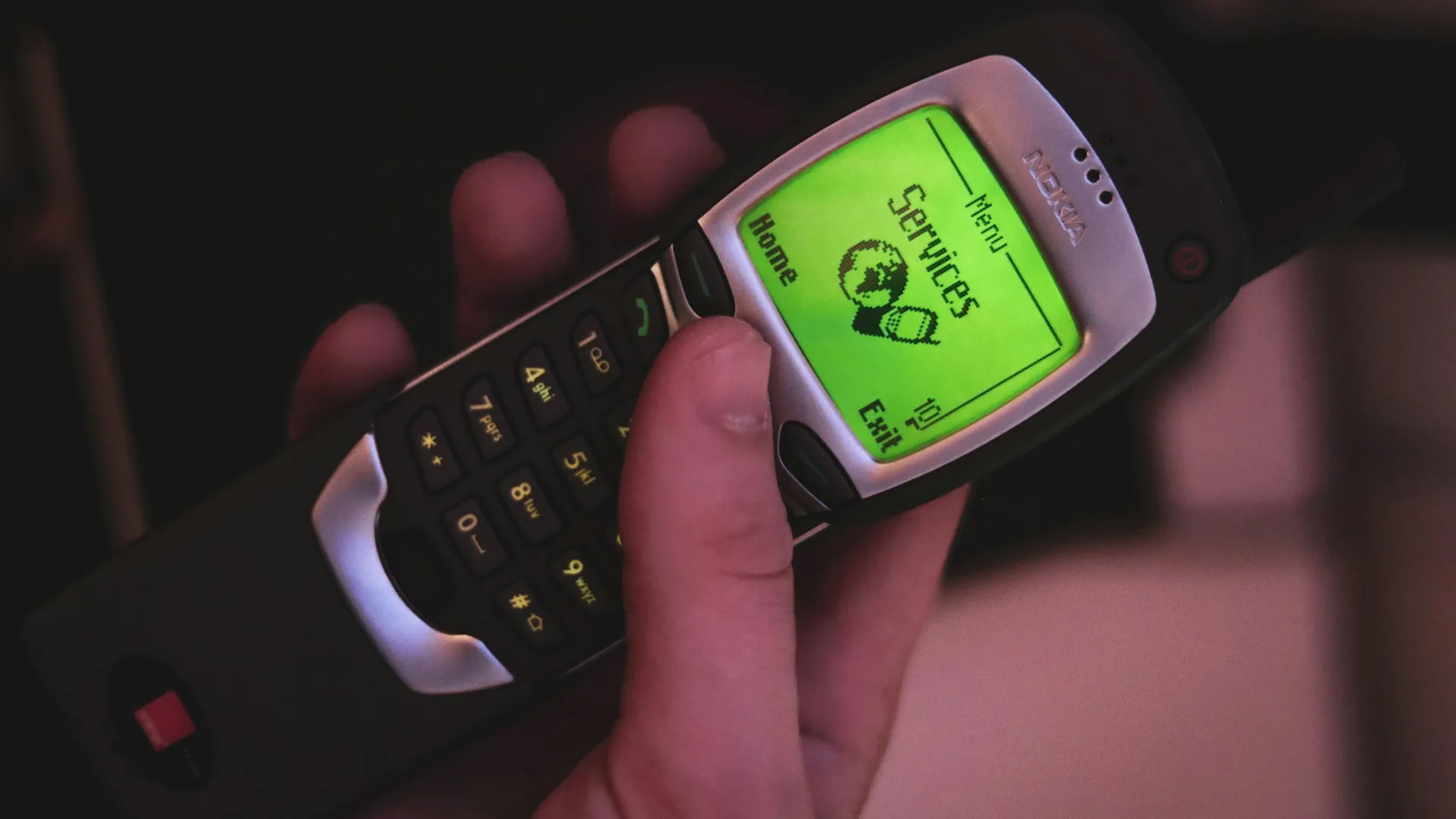
Just a few years ago, pulling out a flip phone in a meeting would have drawn confused looks. In 2026, it signals something entirely different: control — control over your time, your attention, and ultimately, your mental health.
As one New York Times prediction for 2026 puts it: “We’re approaching consensus that smartphones are making our lives dumber, so it’s no surprise that a category of lower-tech devices has been growing.” But there’s an uncomfortable question lurking beneath the trend: Who can afford to be less reachable? A gig worker driving for Uber cannot delete apps with the same ease as a college student. In 2026, flip phones may force us to confront the reality that disconnecting has become a form of privilege.
Trend forecaster WGSN captured this dynamic with the term “digital privilege.” According to their annual top trends forecast: “People who are able to disconnect without sacrificing their career or social standing will view it as a status symbol.” The report suggests that in 2026, going on vacation without sharing a single Instagram reel means you’re now the king of cool.
The movement extends beyond individual phones. Across the country, “attention activism” groups are forming, with gatherings where people place their phones in a colander at the door and spend the evening reading, drawing, and having conversations — anything but staring at screens. As one organizer put it: “The products have become more insidious and more extractive, exploitative. We want to start a revolution.”
The “Analog Bag”: Your Portable Anti-Doomscrolling Kit
One of the most charming and practical trends to emerge from the analog movement is the “analog bag” — a carefully curated tote filled with screen-free activities that are as accessible as your phone.
The idea was popularized by influencer Sierra Campbell, who found that having the bag made her no-tech hobbies readily available anywhere. Each month she refreshes it with new options — books, magazines, journals, knitting supplies — and posts the contents on social media, where her January analog bag reveal garnered over 484,000 TikTok views.
The trend has spawned countless variations: some call it an “analog kit,” others an “anti-doomscrolling couch kit.” Common contents include Murdle puzzle books, embroidery hoops, prompt journals, watercolor sets, and vintage MP3 players — anticipating that itch to reach for your phone. The principle is beautifully simple: make your offline hobbies as easy to access as your online distractions.
The Psychological Benefits of Going Analog
The shift toward analog isn’t just about avoiding screens — it’s about what you gain in return. Research from the University of Saskatchewan analyzed thousands of user reviews of popular games and found that gentle, repetitive activities help with emotional regulation in ways similar to meditation. Tasks like planting, painting, and organizing help players focus on the present moment without feeling overwhelmed.
Today.com spoke with trend experts who confirmed that analog activities offer something digital experiences consistently fail to deliver: a tangible sense of accomplishment. “Needlepointing is emerging as the clear standout,” said one Etsy trend expert, noting that searches for “beginner needlepoint items” are up 208% year over year. The hashtag #Needlepoint has over 119,000 videos on TikTok — an irony not lost on anyone, given that the app is exactly what users are trying to escape.
Beyond individual benefits, these activities are forging new social connections. According to Michaels, more people are swapping nights of sitting on the couch scrolling for group crafting sessions. Paint party kit searches are up 329% year over year, while searches for “girls night crafts” increased 244%. Making things together is replacing passive scrolling as a way to connect.
Practical Strategies for Your Own Digital Reset
You don’t need to buy a flip phone or move to a remote cabin to benefit from the analog renaissance. Here’s how to start recalibrating your relationship with technology this year:
1. Conduct an honest screen audit. Use your phone’s built-in screen time tools to understand exactly where your hours go. Most people are shocked to discover how much time disappears into apps they don’t even remember opening.
2. Start an analog bag. Fill a small tote with one book, a notebook, and a simple craft kit. Keep it in your car or by the couch. When you feel the urge to scroll, reach for the bag instead. The goal is to make offline options as frictionless as online ones.
3. Create phone-free zones and times. The bedroom is the most important: charge your phone outside the room overnight. Make mealtimes screen-free for everyone in the household. Try delaying your first phone check until 30 minutes after waking — you’ll be amazed at how much calmer your mornings become.
4. Curate ruthlessly. Turn off all non-essential notifications. Unfollow accounts that don’t add value. Use your phone’s scheduled summary feature to batch non-urgent notifications into a single daily digest. And try grayscale mode — the lack of bright colors measurably reduces your brain’s dopamine response, making scrolling feel less rewarding.
5. Join an analog community. Search for local crafting meetups, book clubs, or “Offline Club” gatherings in your area. These groups are proliferating across the country and provide both social connection and accountability. In the Netherlands, the Offline Club hosts events in a neo-Gothic cathedral where people “connect with themselves through creative activities or reading or writing or puzzling.” Across the U.S., dozens of “attention activism” groups have formed.
6. Replace, don’t just restrict. Nature abhors a vacuum. If you simply try to “use your phone less,” you’ll find yourself reaching for it out of habit. The key is to fill that time with something more satisfying — a hobby that engages your hands, a walk without headphones, or a face-to-face conversation.
The Bottom Line: Logging Off Is the New Luxury
This trend isn’t about rejecting technology — it’s about recalibrating your relationship with it. People don’t want to go back to 2005. They want to feel like they’re choosing when to be online rather than defaulting to it. They want their attention back. They want to remember what it feels like to be bored, to notice things, to have a conversation without documenting it.
Studies consistently show that replacing even an hour of passive screen time with a hands-on, creative activity leads to meaningful improvements in mood, focus, and overall life satisfaction. The most valuable thing you can do in 2026 might not be downloading the latest AI assistant or productivity app — it might be picking up a knitting needle, a paintbrush, or simply spending an evening with your phone in another room.
In the world’s most connected era, logging off has become the ultimate luxury. The question is: can you afford not to?
Looking for more ways to improve your relationship with technology? Read our guide on Digital Detox 2026: Simple Strategies to Reduce Screen Time or check out AI Healthcare Companions: Can an App Really Improve Your Wellbeing in 2026? in our Health & Wellness section.